53 layers · 7 families
Pattern guide
Behind every layer of the generator is someone’s mathematics: Penrose tilings, the Gray–Scott model, the Mandelbrot set, Chladni plates. Each layer has its own page with a live demo: how it works, where it comes from and what to tweak.
Tilings and mosaics
Tiles that cover the plane with no gaps or overlaps: from Archimedean lattices and girih to the aperiodic hat, plus knots and weaves.
-
 ⧉
SVG
Archimedean tilings
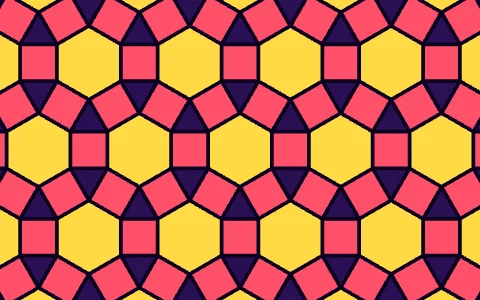
All 11 ways to tile the plane with regular polygons so that every vertex looks the same — and their duals, the Laves tilings.
⧉
SVG
Archimedean tilings
All 11 ways to tile the plane with regular polygons so that every vertex looks the same — and their duals, the Laves tilings.
-
 ⧉
SVG
Islamic star patterns
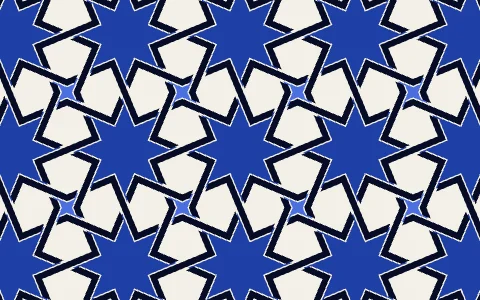
Girih by Hankin's method: rays leave the edge midpoints of an Archimedean tiling at one angle and meet as stars and rosettes, and the straps weave over and under.
⧉
SVG
Islamic star patterns
Girih by Hankin's method: rays leave the edge midpoints of an Archimedean tiling at one angle and meet as stars and rosettes, and the straps weave over and under.
-
 SVG
Quasiperiodic tilings
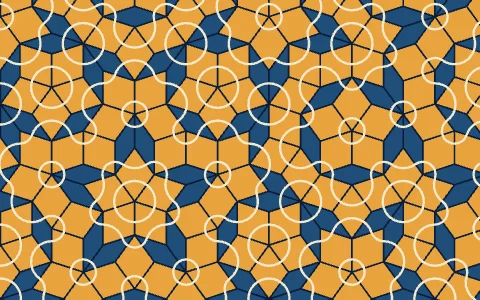
Penrose, Ammann–Beenker and their relatives: order without repetition. De Bruijn's multigrid method and Robinson-triangle deflation.
SVG
Quasiperiodic tilings
Penrose, Ammann–Beenker and their relatives: order without repetition. De Bruijn's multigrid method and Robinson-triangle deflation.
-
 SVG
The aperiodic hat
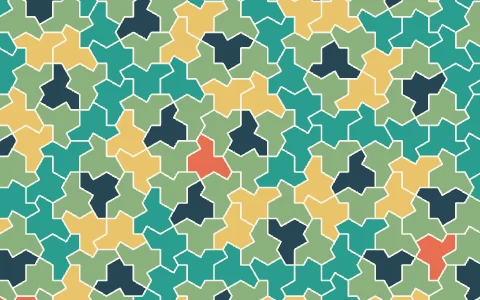
A single 13-sided tile that covers the plane yet never repeats (2023). Built by substituting the H, T, P and F metatiles.
SVG
The aperiodic hat
A single 13-sided tile that covers the plane yet never repeats (2023). Built by substituting the H, T, P and F metatiles.
-
 ⧉
SVG
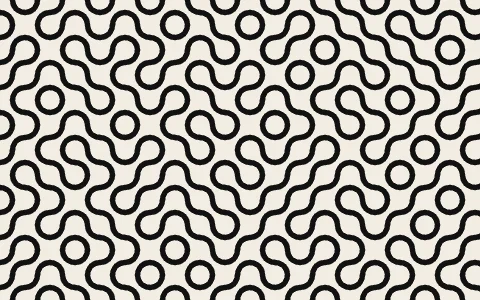
Truchet tiles
One tile in random orientations builds endless paths and mazes.
⧉
SVG
Truchet tiles
One tile in random orientations builds endless paths and mazes.
-
 ⧉
SVG
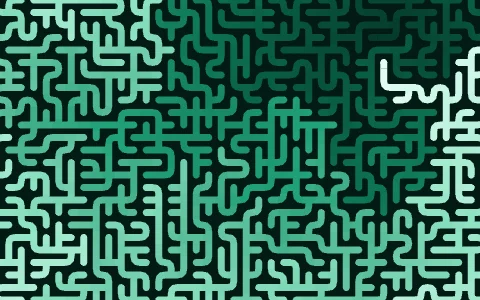
Maze
A uniform spanning tree by Wilson's algorithm: exactly one path between any two cells. Seamless on a torus.
⧉
SVG
Maze
A uniform spanning tree by Wilson's algorithm: exactly one path between any two cells. Seamless on a torus.
-
 ⧉
SVG
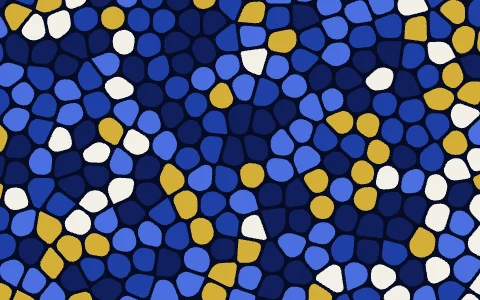
Voronoi and Delaunay
Every point claims the region closest to it: honeycombs, stained glass, low-poly mosaics. Bridson's Poisson disk and Lloyd relaxation.
⧉
SVG
Voronoi and Delaunay
Every point claims the region closest to it: honeycombs, stained glass, low-poly mosaics. Bridson's Poisson disk and Lloyd relaxation.
-
 ⧉
SVG
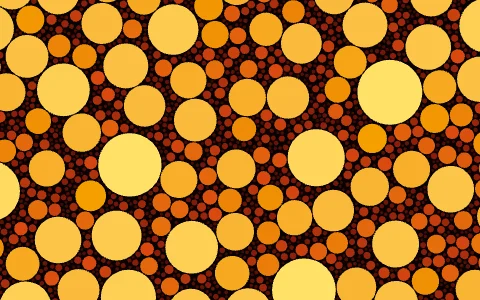
Circle packing
Circles that grow until they touch fill the plane densely; the Apollonian gasket nests circles forever by Descartes' theorem.
⧉
SVG
Circle packing
Circles that grow until they touch fill the plane densely; the Apollonian gasket nests circles forever by Descartes' theorem.
-
 ⧉
SVG
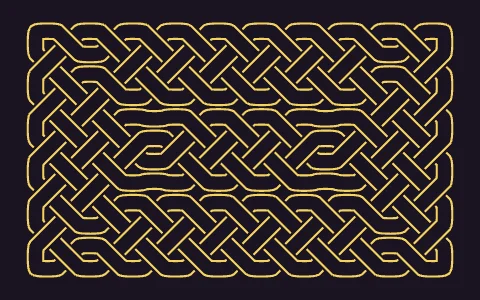
Celtic knots
Knotwork on a Mercat grid: bands run diagonally, strictly over and under, and walls in the grid turn them back in smooth loops.
⧉
SVG
Celtic knots
Knotwork on a Mercat grid: bands run diagonally, strictly over and under, and walls in the grid turn them back in smooth loops.
-
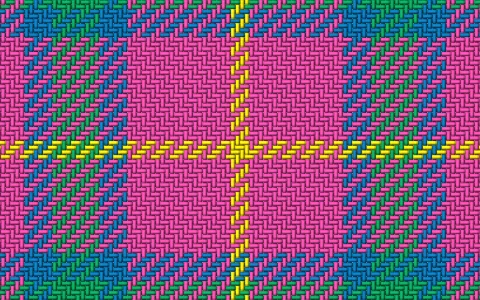 ⧉
Weaves
Cloth from a weave draft: plain, twill, satin, basket, herringbone, houndstooth and tartan — rounded threads dipping under each other.
⧉
Weaves
Cloth from a weave draft: plain, twill, satin, basket, herringbone, houndstooth and tartan — rounded threads dipping under each other.
Fields and noise
Continuous fields: Perlin and Worley noise, domain warping, wave interference and quasicrystals, the stuff of backgrounds and textures.
-
 ⧉
↻
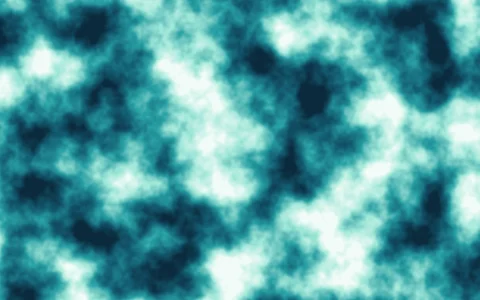
Fractal noise
Octaves of lattice noise summed up: clouds, marble, mountains, smoke. Seamless and looping.
⧉
↻
Fractal noise
Octaves of lattice noise summed up: clouds, marble, mountains, smoke. Seamless and looping.
-
 ⧉
↻
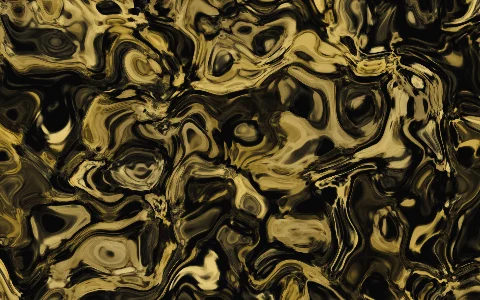
Domain warping
Noise that displaces itself twice: smoke, marble, liquid swirls, marbled paper. Inigo Quilez's method. Seamless and looping.
⧉
↻
Domain warping
Noise that displaces itself twice: smoke, marble, liquid swirls, marbled paper. Inigo Quilez's method. Seamless and looping.
-
 ⧉
↻
Cellular noise
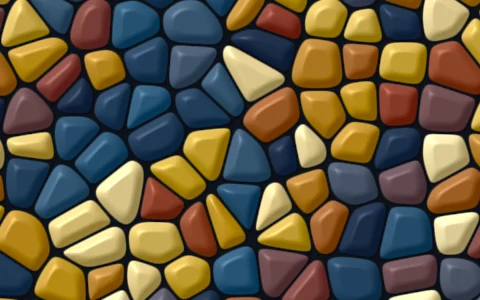
Distances to the nearest random points (Worley noise): bubbles, facets, crackle, grouted mosaic, pebbles, scales.
⧉
↻
Cellular noise
Distances to the nearest random points (Worley noise): bubbles, facets, crackle, grouted mosaic, pebbles, scales.
-
 ⧉
↻
Topographic map
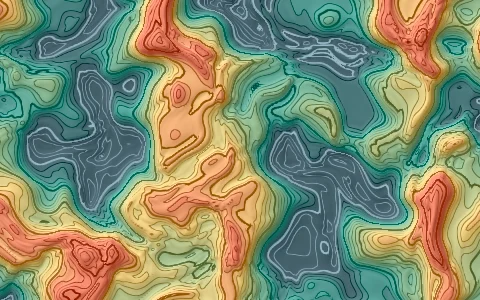
A map of an imaginary land: contour lines with bolder index contours, hypsometric tints and hillshading.
⧉
↻
Topographic map
A map of an imaginary land: contour lines with bolder index contours, hypsometric tints and hillshading.
-
 ⧉
↻
Mesh gradient
Soft blobs of the palette colours flow into each other in OKLab — like the wallpapers of new phones. Seamless and looping.
⧉
↻
Mesh gradient
Soft blobs of the palette colours flow into each other in OKLab — like the wallpapers of new phones. Seamless and looping.
-
 ↻
Quasicrystal
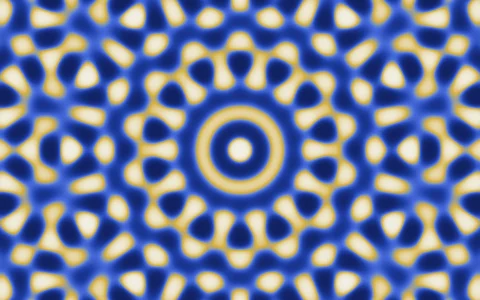
A sum of plane waves with a symmetry no crystal can have: the pattern is ordered yet never repeats.
↻
Quasicrystal
A sum of plane waves with a symmetry no crystal can have: the pattern is ordered yet never repeats.
-
 ↻
Wave interference
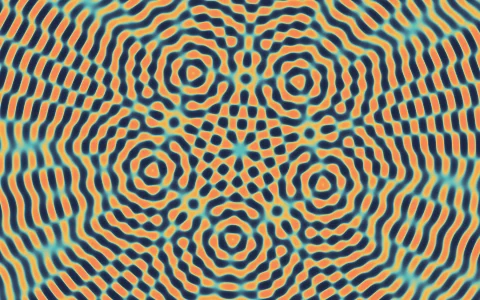
Circular waves from several sources add up and cancel out, as in a ripple tank; drawn as thin rings they make a moiré.
↻
Wave interference
Circular waves from several sources add up and cancel out, as in a ripple tank; drawn as thin rings they make a moiré.
-
 ⧉
↻
Op art
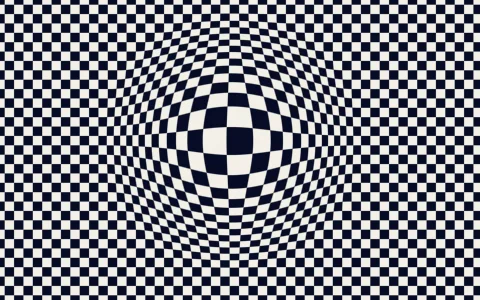
Checkerboards, stripes, Bridget Riley's waves, concentric squares and rings — swollen by lenses like Vasarely's «Vega».
⧉
↻
Op art
Checkerboards, stripes, Bridget Riley's waves, concentric squares and rings — swollen by lenses like Vasarely's «Vega».
Simulations and growth
Patterns that grow by themselves: Turing’s chemistry, slime mould, cellular automata and leaf veins, computed step by step on the GPU.
-
 ⧉
Reaction–diffusion
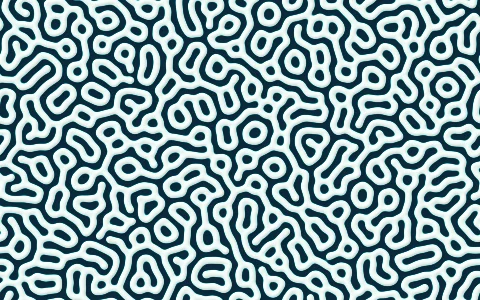
Two chemicals: one feeds the other, both spread at different rates — and Turing's spots, stripes and coral appear.
⧉
Reaction–diffusion
Two chemicals: one feeds the other, both spread at different rates — and Turing's spots, stripes and coral appear.
-
 ⧉
Physarum
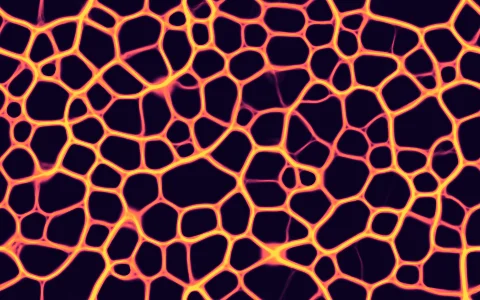
Hundreds of thousands of slime-mould agents follow their own trails, sense them ahead and turn toward the strongest scent — and weave a transport network.
⧉
Physarum
Hundreds of thousands of slime-mould agents follow their own trails, sense them ahead and turn toward the strongest scent — and weave a transport network.
-
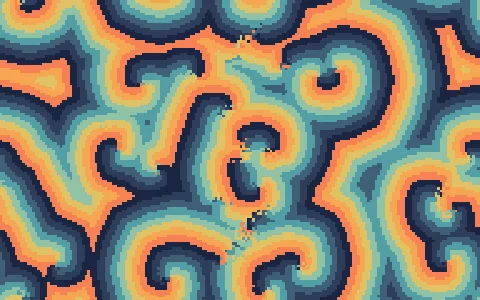 Cellular automata
A grid of cells, each looking at its neighbours by one rule over and over: spirals, mazes, coral and Wolfram's triangles grow out of random noise.
Cellular automata
A grid of cells, each looking at its neighbours by one rule over and over: spirals, mazes, coral and Wolfram's triangles grow out of random noise.
-
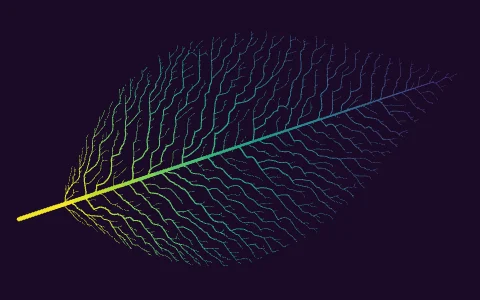 SVG
Venation
Veins grow toward scattered growth points and use them up on the way — the way leaf veins, coral and river beds branch.
SVG
Venation
Veins grow toward scattered growth points and use them up on the way — the way leaf veins, coral and river beds branch.
Fractals
Self-similarity at every scale: the Mandelbrot set, fractal flames, strange attractors, the hyperbolic plane and L-systems.
-
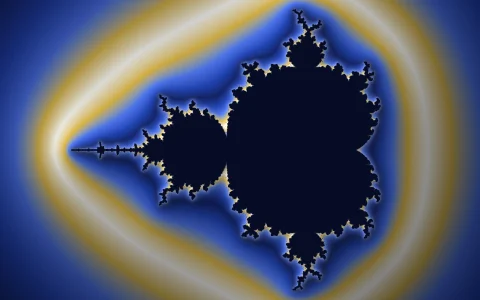 ↻
Mandelbrot and Julia
Every point of the plane starts an orbit z → z² + c; the colour tells how fast it runs away. Zooms to 10⁻¹².
↻
Mandelbrot and Julia
Every point of the plane starts an orbit z → z² + c; the colour tells how fast it runs away. Zooms to 10⁻¹².
-
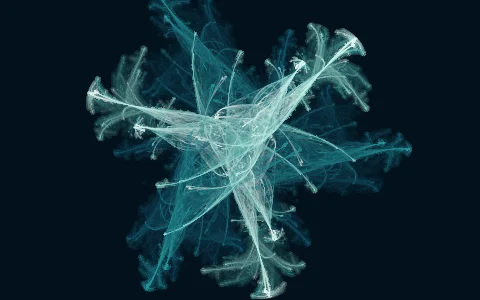 ↻
Fractal flames
An iterated function system with non-linear «variations»: a million particles play the chaos game and their trails glow by log density.
↻
Fractal flames
An iterated function system with non-linear «variations»: a million particles play the chaos game and their trails glow by log density.
-
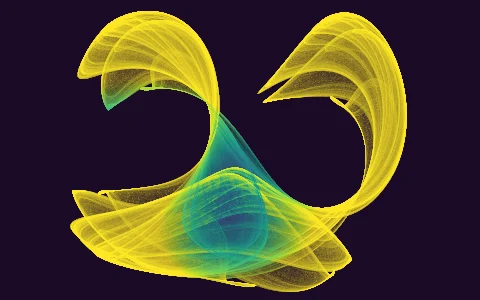 ↻
Strange attractors
A simple formula repeated millions of times draws the cloud a chaotic orbit is pulled into.
↻
Strange attractors
A simple formula repeated millions of times draws the cloud a chaotic orbit is pulled into.
-
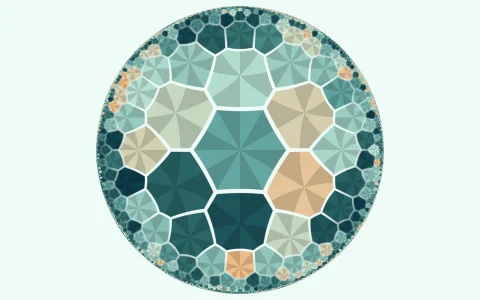 ↻
Hyperbolic tilings
Regular {p, q}: p-gons, q at every vertex — they only fit on the hyperbolic plane. Poincaré disk, half-plane, band.
↻
Hyperbolic tilings
Regular {p, q}: p-gons, q at every vertex — they only fit on the hyperbolic plane. Poincaré disk, half-plane, band.
-
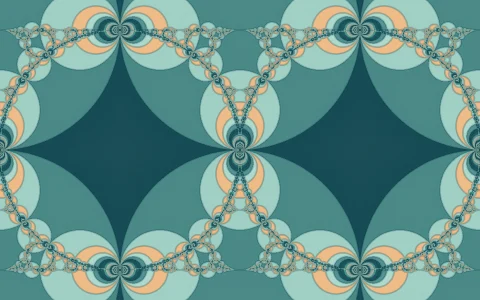 ↻
Circle inversions and Kleinian groups
Groups of Möbius maps: where their orbits pile up, the limit set appears — a lace of circles («Indra's Pearls»).
↻
Circle inversions and Kleinian groups
Groups of Möbius maps: where their orbits pile up, the limit set appears — a lace of circles («Indra's Pearls»).
-
 SVG
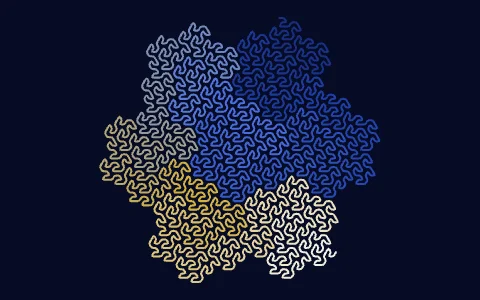
L-systems
A word rewritten by rules generation after generation and read as turtle moves: space-filling curves, snowflakes, dragons, plants.
SVG
L-systems
A word rewritten by rules generation after generation and read as turtle moves: space-filling curves, snowflakes, dragons, plants.
Curves
Lines from formulas: banknote guilloche, the harmonograph, sunflower phyllotaxis, the superformula, streamlines and the ridgelines of Unknown Pleasures.
-
 ↻
SVG
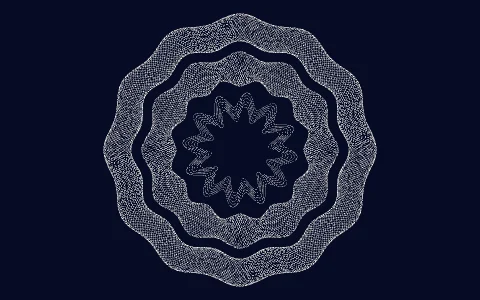
Guilloché and spirograph
The engraving of banknotes and watch dials: hundreds of fine lines woven into rosettes, trochoids and ornamental borders.
↻
SVG
Guilloché and spirograph
The engraving of banknotes and watch dials: hundreds of fine lines woven into rosettes, trochoids and ornamental borders.
-
 ♪
↻
SVG
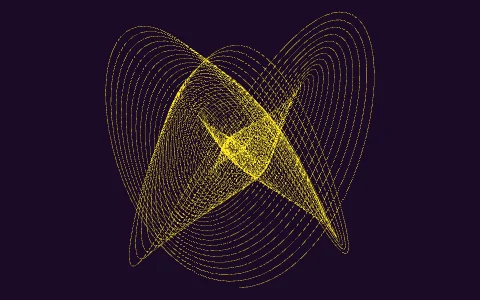
Harmonograph
Damped pendulums steer a pen across paper: the musical interval between them draws a figure that slowly turns as it fades.
♪
↻
SVG
Harmonograph
Damped pendulums steer a pen across paper: the musical interval between them draws a figure that slowly turns as it fades.
-
 ↻
SVG
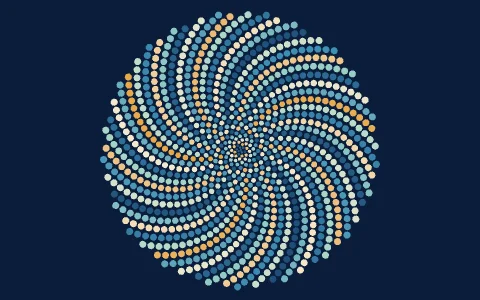
Phyllotaxis
How a sunflower packs its seeds: each one a golden angle further round, and spirals in Fibonacci numbers appear by themselves.
↻
SVG
Phyllotaxis
How a sunflower packs its seeds: each one a golden angle further round, and spirals in Fibonacci numbers appear by themselves.
-
 ⧉
↻
SVG
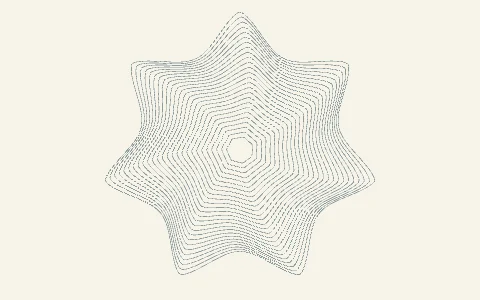
Gielis superformula
One equation by Johan Gielis draws circles, polygons, stars, flowers and shells — as nested outlines, a grid or a table of shapes.
⧉
↻
SVG
Gielis superformula
One equation by Johan Gielis draws circles, polygons, stars, flowers and shells — as nested outlines, a grid or a table of shapes.
-
 ⧉
↻
SVG
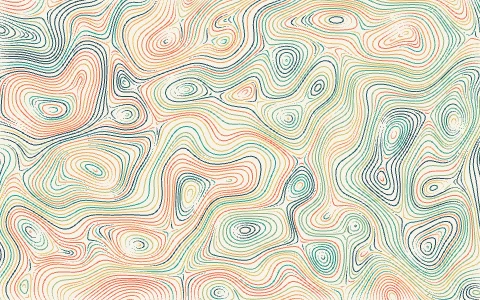
Flow lines
Evenly spaced streamlines of a vector field after Jobard and Lefer: swirling noise, whirlpools, dipole field lines — as if drawn by a pen plotter.
⧉
↻
SVG
Flow lines
Evenly spaced streamlines of a vector field after Jobard and Lefer: swirling noise, whirlpools, dipole field lines — as if drawn by a pen plotter.
-
 ♪
SVG
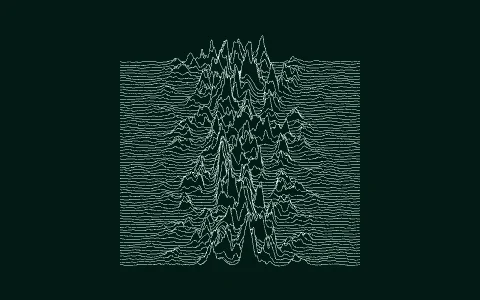
Ridgelines
The Unknown Pleasures look: dozens of lines one behind another, each hiding the ones behind it. From noise — or from sound: a portrait of a track or ridges flowing with the music.
♪
SVG
Ridgelines
The Unknown Pleasures look: dozens of lines one behind another, each hiding the ones behind it. From noise — or from sound: a portrait of a track or ridges flowing with the music.
Sound
Patterns made of sound: a track’s spectrogram and chromagram, the XY oscilloscope, Chladni figures and Faraday waves from notes.
-
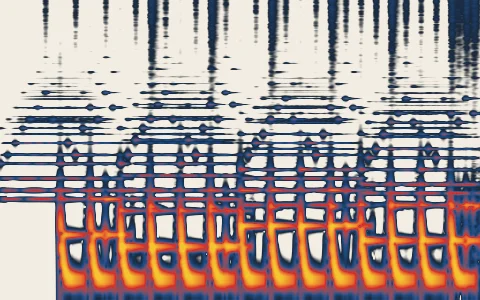 ♪
Spectrogram
Sound as a picture: time along one axis, frequency along the other, loudness as colour. A portrait of a whole track or a live scrolling strip.
♪
Spectrogram
Sound as a picture: time along one axis, frequency along the other, loudness as colour. A portrait of a whole track or a live scrolling strip.
-
 ♪
SVG
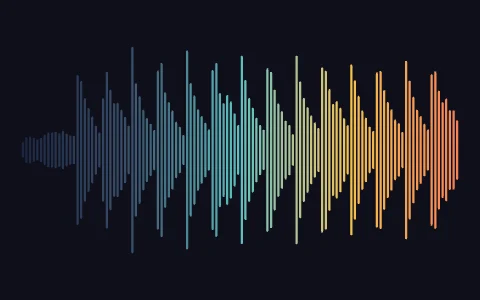
Waveform
A track's loudness over time as rounded bars, a mirrored skyline, an envelope, rings or a spiral. Live, an oscilloscope trace of the sound right now.
♪
SVG
Waveform
A track's loudness over time as rounded bars, a mirrored skyline, an envelope, rings or a spiral. Live, an oscilloscope trace of the sound right now.
-
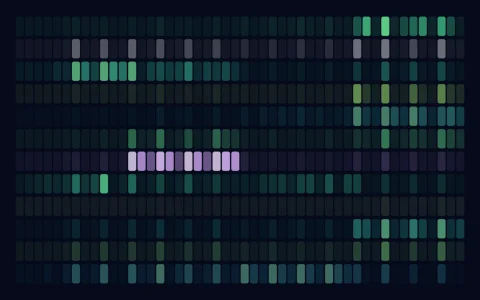 ♪
Chromagram
How much of each of the twelve notes — C, C♯ … B, octaves folded together — sounds at every moment: harmony you can see.
♪
Chromagram
How much of each of the twelve notes — C, C♯ … B, octaves folded together — sounds at every moment: harmony you can see.
-
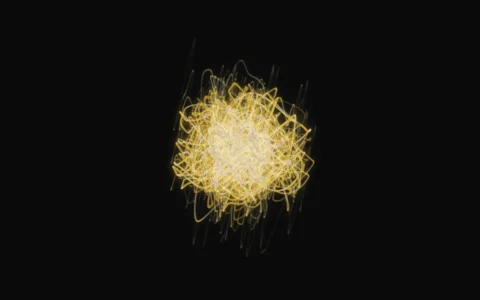 ♪
XY oscilloscope
The left channel against the right, like a studio goniometer: mono is a vertical line, wide stereo a cloud, pure intervals Lissajous figures. The beam glows like phosphor.
♪
XY oscilloscope
The left channel against the right, like a studio goniometer: mono is a vertical line, wide stereo a cloud, pure intervals Lissajous figures. The beam glows like phosphor.
-
 ♪
⧉
↻
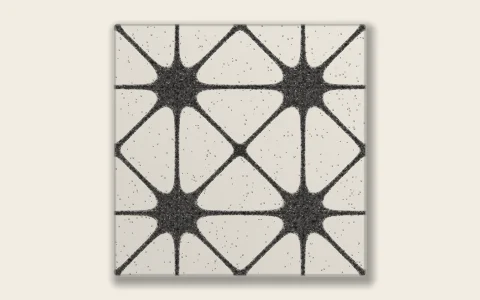
Chladni figures
Sand on a sounding plate runs off the shaking parts and gathers on the nodal lines, where the plate stands still. A note picks the figure; a chord adds several.
♪
⧉
↻
Chladni figures
Sand on a sounding plate runs off the shaking parts and gathers on the nodal lines, where the plate stands still. A note picks the figure; a chord adds several.
-
 ♪
↻
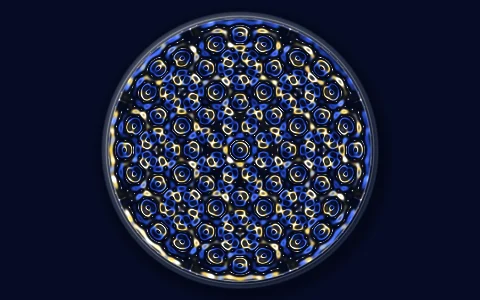
Faraday waves
Shake a dish of liquid at an audio frequency and standing waves rise on its surface: squares, hexagons, 8-, 10- and 12-fold quasi-patterns. The note sets the symmetry and the wavelength.
♪
↻
Faraday waves
Shake a dish of liquid at an audio frequency and standing waves rise on its surface: squares, hexagons, 8-, 10- and 12-fold quasi-patterns. The note sets the symmetry and the wavelength.
Effects
Processing everything below: the 17 wallpaper groups, kaleidoscope, halftone, dithering, relief, glow and grain.
-
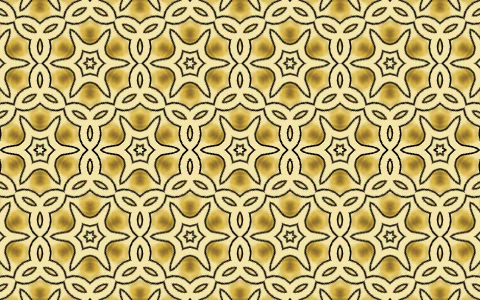 ⧉
Wallpaper symmetry
All 17 ways a pattern can repeat on the plane. The motif is the picture below.
⧉
Wallpaper symmetry
All 17 ways a pattern can repeat on the plane. The motif is the picture below.
-
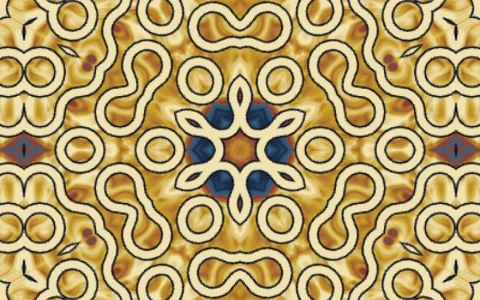 ↻
Kaleidoscope
A rosette made of the picture below: n rotations with or without mirrors, plus optional endless Droste recursion — in rings or Escher's spiral.
↻
Kaleidoscope
A rosette made of the picture below: n rotations with or without mirrors, plus optional endless Droste recursion — in rings or Escher's spiral.
-
 ⧉
↻
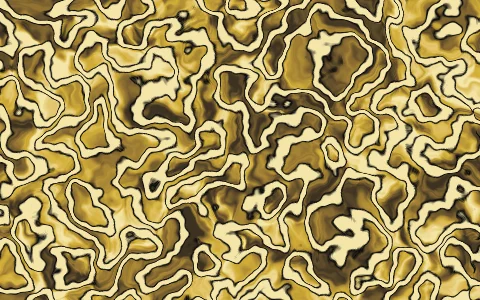
Distort
The picture below flows, swirls, bulges, wraps into a «tiny planet» or shows through fluted glass.
⧉
↻
Distort
The picture below flows, swirls, bulges, wraps into a «tiny planet» or shows through fluted glass.
-
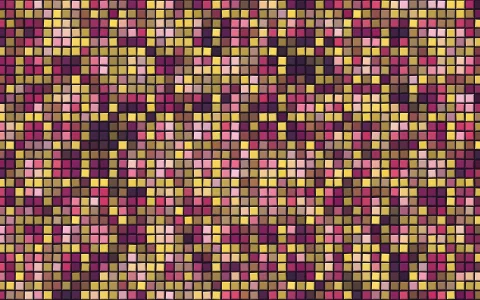 ⧉
Mosaic
The picture below laid in tesserae: squares, bricks, hexagons, triangles or Voronoi cells, set in grout and bevelled.
⧉
Mosaic
The picture below laid in tesserae: squares, bricks, hexagons, triangles or Voronoi cells, set in grout and bevelled.
-
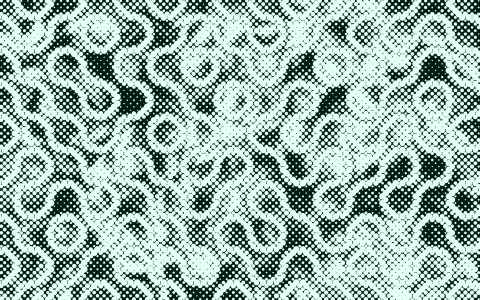 ⧉
Halftone
The picture below as a newspaper or magazine print: dots, lines, diamonds or crosses, in one ink or four CMYK screens.
⧉
Halftone
The picture below as a newspaper or magazine print: dots, lines, diamonds or crosses, in one ink or four CMYK screens.
-
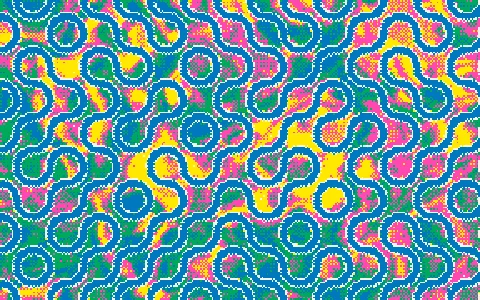 ⧉
Dither
The picture below in chunky pixels and a few colours: a Bayer matrix, blue noise or gradient noise turns halftones into a dot pattern.
⧉
Dither
The picture below in chunky pixels and a few colours: a Bayer matrix, blue noise or gradient noise turns halftones into a dot pattern.
-
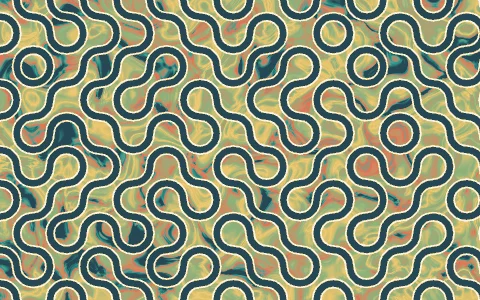 ⧉
Palette recolour
Recolours the picture below with the document colours: a gradient map by lightness, the nearest palette colour or a hue rotation in OKLCH.
⧉
Palette recolour
Recolours the picture below with the document colours: a gradient map by lightness, the nearest palette colour or a hue rotation in OKLCH.
-
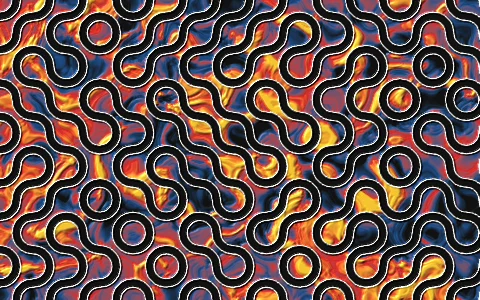 ⧉
Relief
The brightness of the picture below becomes height, lit by a lamp: emboss, a shaded picture or polished metal.
⧉
Relief
The brightness of the picture below becomes height, lit by a lamp: emboss, a shaded picture or polished metal.
-
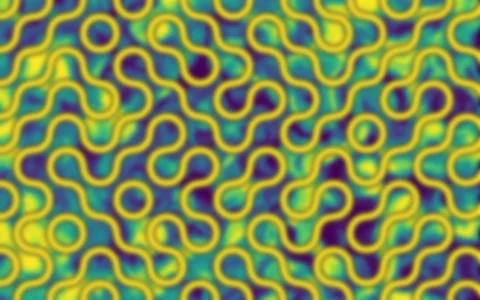 ⧉
Blur
Blurs the picture below: Gaussian, motion, a camera zoom or a spin around a centre. The radius is in frame units.
⧉
Blur
Blurs the picture below: Gaussian, motion, a camera zoom or a spin around a centre. The radius is in frame units.
-
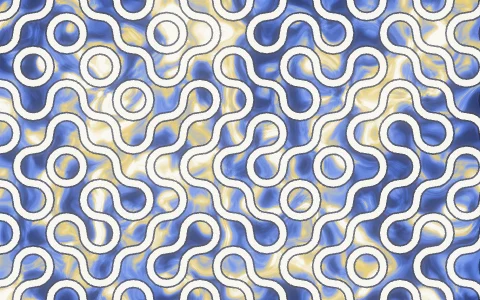 ⧉
Glow
Bright parts of the picture below get a soft halo, like in a lens or on film (bloom).
⧉
Glow
Bright parts of the picture below get a soft halo, like in a lens or on film (bloom).
-
 ⧉
↻
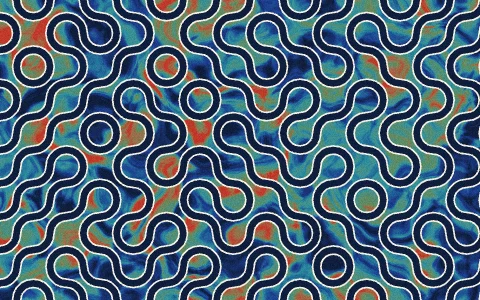
Grain
Film grain over the picture: sized in frame units, strongest in the midtones, mono or colour; in animation it changes every frame and loops.
⧉
↻
Grain
Film grain over the picture: sized in frame units, strongest in the midtones, mono or colour; in animation it changes every frame and loops.
-
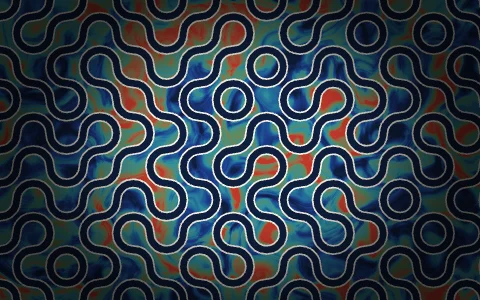 Vignette
The picture fades gently towards the edges — into darkness, light or a palette colour.
Vignette
The picture fades gently towards the edges — into darkness, light or a palette colour.
-
 ⧉
RGB shift
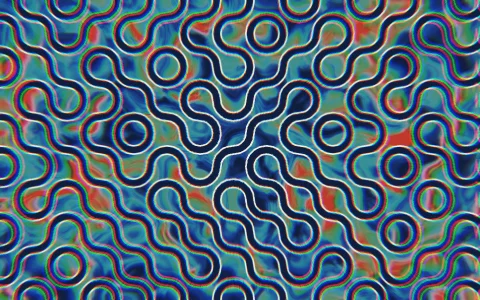
Chromatic aberration: the channels spread from the centre like in a cheap lens, or slide one way like a misregistered print.
⧉
RGB shift
Chromatic aberration: the channels spread from the centre like in a cheap lens, or slide one way like a misregistered print.
Nothing found