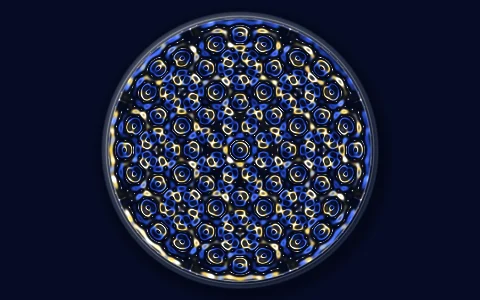
When a bow is drawn across the edge of a sand-strewn metal plate clamped at its centre, the plate sings and the sand leaps, gathering within a second into crosses, stars or rings. These are Chladni figures: the sand leaves the shaking parts and collects on the nodal lines, where the plate stands still. Every note has its own figure, and the higher the note, the finer it is.
How it works
A sounding plate vibrates in its eigenmodes, standing waves that fit its shape. The generator uses the classic approximation, with cosines on the square and a Bessel function on the disc.
Modes (m, n) and (n, m) share a frequency, so their sum and difference are equally valid; “Symmetric mode” switches between them. Unlike a string, a plate's frequency grows as the square of the wavenumber: a figure twice as fine needs a note two octaves higher. “Notes” picks the mode with the nearest frequency: C2 matches m² + n² = 5, and C5, eight times higher, gets m² + n² = 40, the mode (2, 6). A chord overlays several modes, and in the animation the sand walks through them in turn.
A bit of history
Ernst Chladni described his figures in 1787 and demonstrated them at courts across Europe. In 1809 an impressed Napoleon had the Paris Academy of Sciences offer a prize for a mathematical theory of vibrating plates. Sophie Germain won it in 1816 at her third attempt, the first woman to win an Academy prize. Her theory still had flaws: Gustav Kirchhoff found the right conditions for a free edge in 1850, and Walther Ritz computed the figures of a square plate in 1909. Chladni was also one of the first to argue that meteorites fall from space.
What to tweak
- Try “Notes” such as “C5”, “A4 E5”, “Am” or “440”; the ▶ button beside the field plays them.
- “Mode m” and “Mode n” set the figure by hand; on a “round” “Plate” m counts diameters and n rings.
- “Draw” “nodal lines” gives clean line art; “displacement” shows which parts move up and which down.
- “Plates per row” at 3 in tile mode makes a seamless tile of figures.
- Modulate “Sand” with sound (source “sound”, band “beat”) and load a track or turn on the microphone: the sand pulses in time. A song from the Studio arrives via “Visualise in Patterns”, and a video with sound (“Download” → “Video” → “With sound”) keeps it all together.
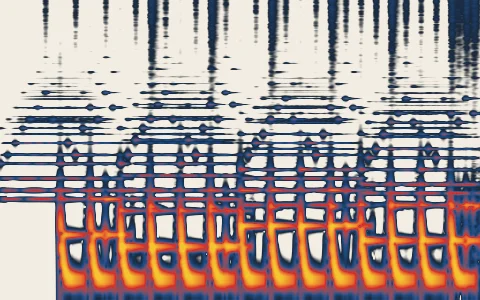 Spectrogram
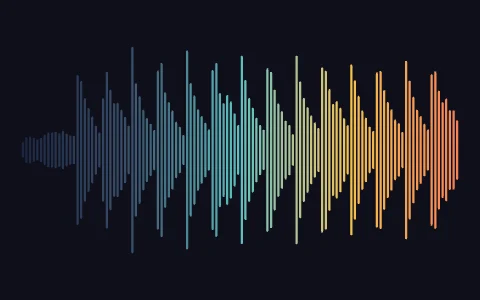 Waveform
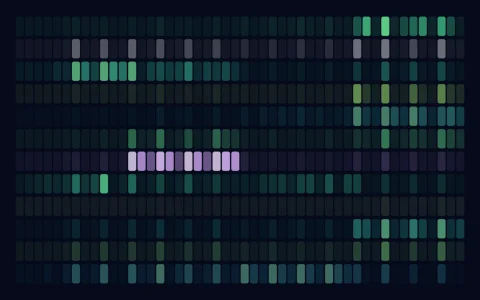 Chromagram
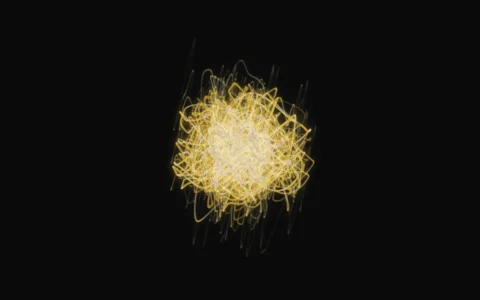 XY oscilloscope
 Faraday waves